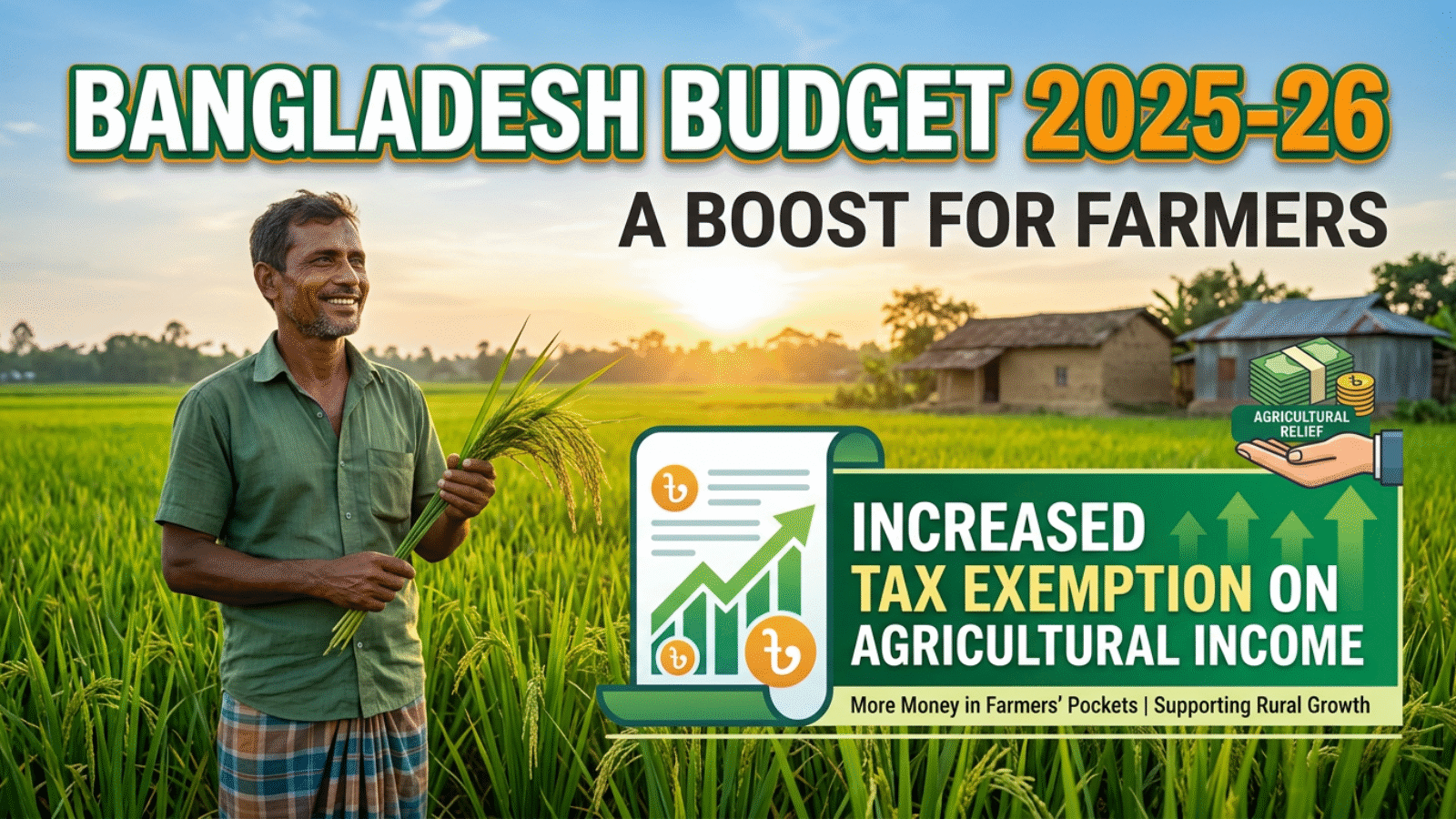
In a significant move to bolster the agricultural sector and support the rural economy, the proposed national budget for the 2025-26 fiscal year in Bangladesh includes a substantial increase in the tax-exempt threshold for agricultural income. This key fiscal measure aims to encourage farming and alleviate the tax burden on individual farmers, a critical component of the nation’s workforce and food security.
The centerpiece of the proposal is the raising of the tax-free limit on agricultural income to BDT 500,000, a considerable jump from the previous BDT 200,000. This means that individuals whose sole income is from agriculture will not be required to pay any income tax if their earnings remain within this new limit. This initiative has been lauded as a significant step towards the development of the agricultural sector.
Defining Agricultural Income
Under the purview of the Income Tax Act 2023, which replaced the earlier Income Tax Ordinance of 1984, agricultural income is broadly defined as income derived from land used for agricultural purposes.123 This includes revenue generated from the sale of crops, produce from farm buildings, and even the sale of agricultural machinery.3
The law further categorizes agricultural income, with some sources being fully taxable while others are partially so. For instance, income from the cultivation of tea or rubber is treated as a mix of agricultural and business income, with 60% classified as agricultural and the remaining 40% as business income.3
Allowable Deductions for Farmers
To ensure a fair calculation of taxable income for those earning above the exemption limit, the law permits several deductions. Farmers can subtract various costs incurred during their agricultural activities. These allowable deductions include:
- Land development tax and other local taxes or cesses paid on the agricultural land.
- Premiums paid for insurance against the loss of or damage to crops or cattle.
- The cost of production, which encompasses expenses for cultivation, rendering produce marketable, and transporting it to the market.
- Maintenance costs for agricultural implements and machinery.
It is important for farmers to maintain proper books of accounts. In cases where such records are not kept, the cost of production is determined as 60% of the market value of the agricultural produce.

Broader Support for the Agricultural Sector
Beyond the direct tax exemption, the proposed 2025-26 budget also contains other measures aimed at supporting the broader agricultural ecosystem. These include a reduction in the advance income tax on industrial raw materials, which is expected to lower costs for agro-processors.4 Additionally, the budget proposes to decrease the withholding tax on the supply of essential agricultural goods like paddy, wheat, and potatoes.4
A Move Towards Greater Scrutiny
While the increased exemption is a welcome relief for many, it comes at a time of increased scrutiny regarding tax policies in the agricultural sector. In the past, there have been concerns about the misuse of tax exemptions, particularly in sectors like fisheries and poultry, which were reportedly used as a means to obscure undeclared income.5 The government has also faced pressure from international bodies like the International Monetary Fund (IMF) to phase out certain tax exemptions. This new budget, therefore, strikes a balance between providing necessary support to genuine farmers and signaling a move towards a more transparent and equitable tax system for all. The increased tax-free limit for agricultural income is a clear indicator of the government’s commitment to fostering growth in this vital sector, which remains the backbone of the Bangladeshi economy